
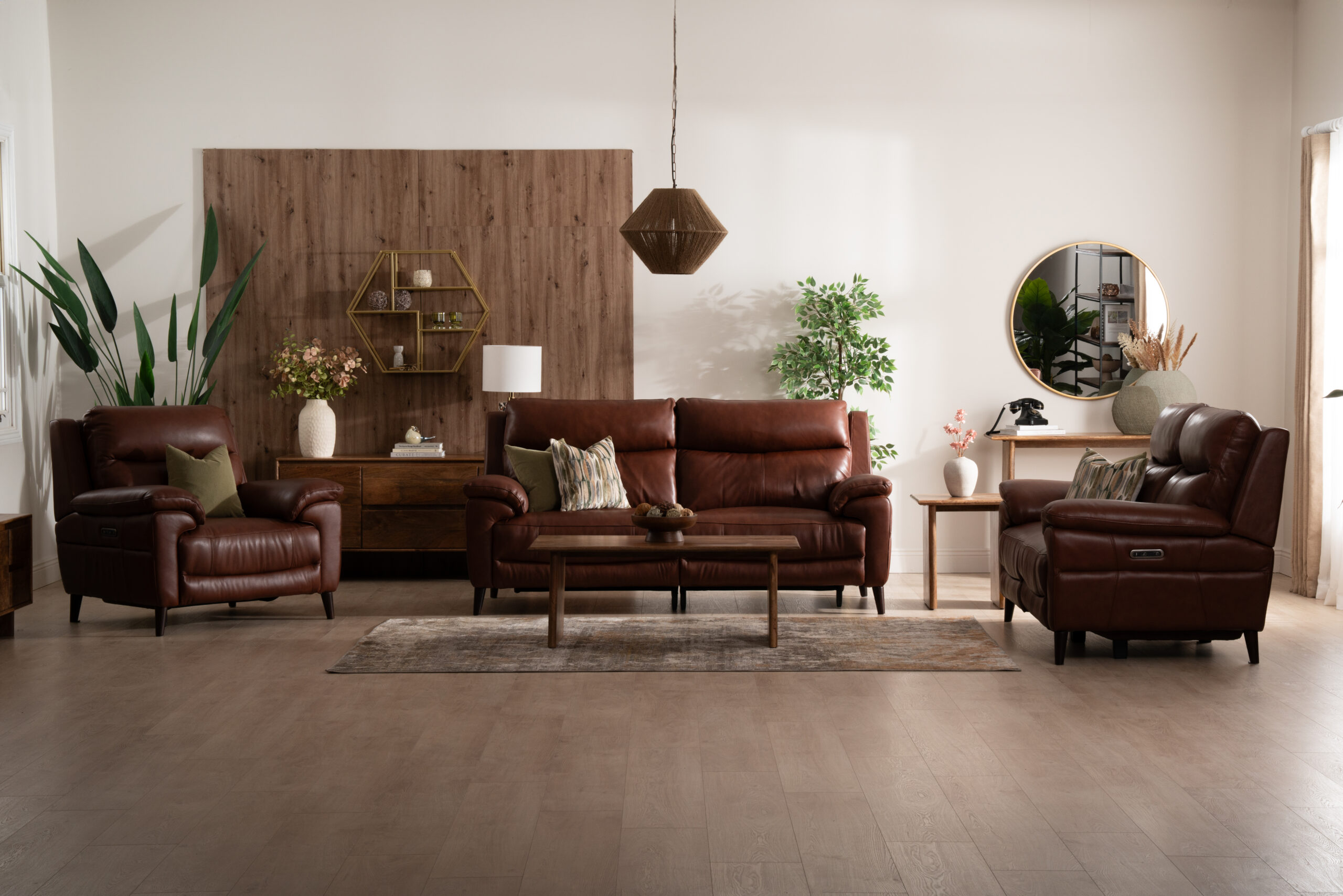
Choosing a new sofa is a big decision, and now that we’ve covered how to choose the right size for your space, it’s time to settle on a colour. Considering that the sofa is generally one of the largest pieces of furniture in the room, landing on the right shade isn’t the most straightforward choice in the world. Unlike lamps and cushions that are easily picked up and switched out, once you decide on a sofa hue, it’s something you’ll be looking at (and sitting on) for a while. We also tend to use the sofa more heavily than other furniture pieces, so making sure it can stand up to daily wear and tear is an important consideration.
All of this brings us to why choosing the right sofa colour can sometimes feel so difficult. Do you play it safe with a neutral? Or go bold with a colour you love? Match with your existing décor, or use the sofa as a starting point? So many questions!
Start with the room you already have
Before falling headfirst with a particular colour, take a moment to assess everything else in your living room. Take your flooring, wall colour, curtains, rugs, and existing furniture all into account; all of these will affect how a sofa looks once it’s in place.
If your room already has plenty going on in terms of colour, whether that be patterned flooring, colourful artwork, or statement furniture, a neutral sofa can help to balance everything out. On the other hand, if you feel the room is a bit plain, or lacking depth, a colourful sofa can be the perfect feature to tie it all together. Pro tip: It’s well worth taking fabric swatches home with you. Colours can look completely different when the lighting changes, so compare how they react to natural light, and your home lighting, rather than showroom lights.
Consider the size and brightness of the room

Believe it or not, the colour of your sofa can influence how large or cosy your living room actually feels. Lighter shades such as cream, beige, soft grey, and pale blue can help a smaller room feel more open and airy, even more so when they’re paired with light walls and flooring. Darker colours can make a room feel warmer and more intimate, which lends itself well to cosiness. Although, a large dark sofa in a small room with limited natural light can sometimes feel a bit visually overwhelming, and tends to make the space feel smaller.
However! That by no means dictates that small rooms should automatically avoid dark sofas. You just need to style the rest of the room so that there’s balance, using lighter walls, accessories, or flooring.
Think about how you actually live
Sorry to the dreamers, but this is where cold, hard practicality comes in. A cream sofa might look beautiful, and you might have your heart set on it, but if you have young children, pets, or regularly eat dinner in front of the telly, there may be more maintenance required than you’re willing to take on. That is, unless, you look for resilient fabric! Your fabric choice can make a difference; some upholstery is just easier to clean and maintain than others, so it is worth considering both the colour and the material if you’re worried about wear and tear.
Darker colours and patterned fabrics are in general, much more forgiving when it comes to everyday spills and scuff marks. Mid-toned shades like taupe, grey, and olive green are also a great middle ground that are practical without making the room feel too dark.

Decide whether you want go timeless or statement
Neutral colours have been and remain popular for a reason. Shades like beige, grey, cream, and taupe are versatile and can work with changing trends as they evolve over time. There’s more freedom involved when updating the look of your living room when it comes to additions like cushions, throws, and accessories, rather than having to replace the sofa itself.
That said, choosing a colourful sofa doesn’t mean it will all of a sudden look outdated within a few years. A rich green, deep blue, or warm rust shade can feel just as timeless if it genuinely suits your home and your personal style. If you love colour, but find yourself nervous about committing to it, consider a deeper, more muted shade over something extremely bright. It can still add personality without taking over the room, and you can inject more colour through less permanent accessories like rugs, throws, and cushions!
Don’t overlook the undertones
While two sofas might be described as grey, one could have cool blue undertones, and another could have warmer brown or beige undertones. These differences (while small) can have a big impact on how well the sofa works with the rest of your room. Before you buy, take a look at your existing décor and determine whether it leans warm or cool overall. Warm wood flooring, cream walls, and brass accessories tend to work really well with warmer sofa tones, while cooler greys, whites, and chrome pair nicely with cooler shades.
These are by no means rules you should follow religiously, but paying attention to undertones can help to prevent a room that looks off-balance once the sofa arrives home.
Choose a colour you’ll be happy living with
At the end of the day, the best sofa colour for you is one that works well within your space, suits your lifestyle, and is a colour you’ll enjoy seeing everyday without tiring of. Trends are great places to start for inspiration, and they can absolutely prove useful from time to time, but your sofa should hopefully still be around long after the trend cycle has moved on.
If you’re unsure, start with practical considerations, look at the colours and décor already in your home, and order fabric swatches when you can. A little bit of extra thought before committing can make all the difference when you finally sit back and enjoy your new sofa. If you’re entirely unsure of where to start, pop into any of our stores across the country — our teams are on hand and always happy to help!