
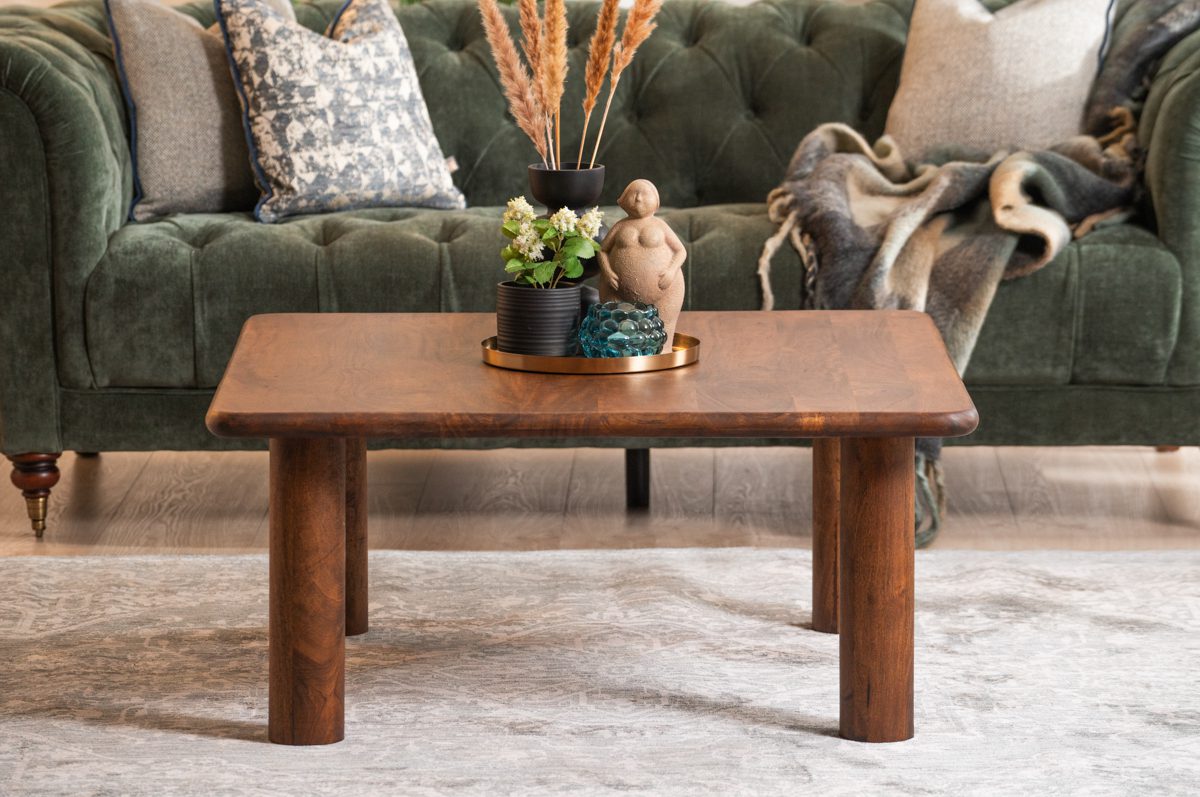
Have you ever looked at a room and wondered why some interiors just look more… right than others? Minimal or eclectic, there’s a simple design trick behind many of those Pinterest-worthy spacaes; The Rule of Threes.
This tried-and-tested principle is a favourite among interior designers, and for very good reason, let me tell you. It brings about balance, contrast, and visual interest to any room, whether you’re styling a shelf, coffee table, or even a bed. And the best part? It’s really easy to do at home, no design degree required.
What is the Rule of Threes?
At it’s core, the rule of threes is a design guideline that says items grouped in odd numbers (espcially in sets of threes) are more visually appealing than even-numbered groupings. That’s because odd numbers, particularly three create a sense of rhythm and asymmetry that feels more natural, and less staged. It’s a great way to make your styling look visually interesting, without looking forced.
In interior design, this might look like;
- Three cushions on a sofa
- A trio of candles on a sideboard
- Three pieces of artwork on a gallery wall
- A vase, book, and another decorative accessory on a coffee table
There’s a real sweet spot to hit with three pieces. It’s enough to create variety, but not so much that it feels cluttered.
Why It Works
Our brains love patterns, but we also do enjoy a bit of predictability. Odd numbers, especially in groups of three strike the perfect balance between symmetry and surprise. They draw the eye and create a focal point without overwhelming the space.
Three also allows for contrast and variation! To make a vignette feel layered and dynamic, include a variation of heights and textures!
How to Use It at Home
So now that you know how to use it, let’s explore how you can use it best! The rule of threes can easily be used all over your home; so we’ll break it down.
1. Coffee Tables & Sideboards
This is where the rule of threes truly shines. Group three items together, like a stack of books, a candle, and a small vase, and play with scale. Aim for variation in height, shape, and texture to really highlight each piece. For example, go for;
- A tall ceramic vase
- A medium-sized scented candle
- A stack of two or three books.
Our Tip: Use a tray to anchor the grouping and make the space feel cohesive.
2. Sofas & Beds
When styling cushions, three is often the magic number (unless you’re a cushion fiend, in which case, carry on as you were). On a sofa, try three cushions in complementary tones or textures. On a bed, layer three decorative cushions in front of your pillows for a boutique hotel look.
Remember, it doesn’t have to be three of the same thing. It’s more about creating a balanced trio than exactly identical items.
3. Wall Art
Gallery walls can feel overwhelming, especially if you’re starting from scratch (so much so, we even wrote a blog about it). However, if you stick to odd-numbered layouts, like three frames in a row, or a central piece flanked by two smaller ones, you’ll be able to bring a bit more structure and balance to the space.
Our Tip: Switch up your frame styles and sizes while staying within a neutral colour palette for a cool and cohesive look!
4. Dining & Outdoor Tables
Even your dining or garden table can benefit from the rule of threes. A tall jug of flowers, a textured bowl, and a candle make a simple, yet elegant centrepiece. For something more minimalist, think in threes with your tableware; a plate, a napkin, and a decorative placemat.
5. Shelving & Display Units
Whether it’s built-in shelves or a freestanding display, aim to group decorative items in threes for a balanced, curated look. You could go for;
- A framed photo
- A sculptural object
- An indoor plant
Remember to vary the heights and textures to keep the eye moving and avoid a static, flat look!
When to Break the Rule
Like all rules, this one is meant to be broken from time to time. Sometimes, especially in very minimal spaces, a single statement piece works best. Alternatively, in a maximalist room, a cluster of five items might feel just right.
The key is to trust your eye. If a grouping feels off, try removing or re-arranging until it clicks.