
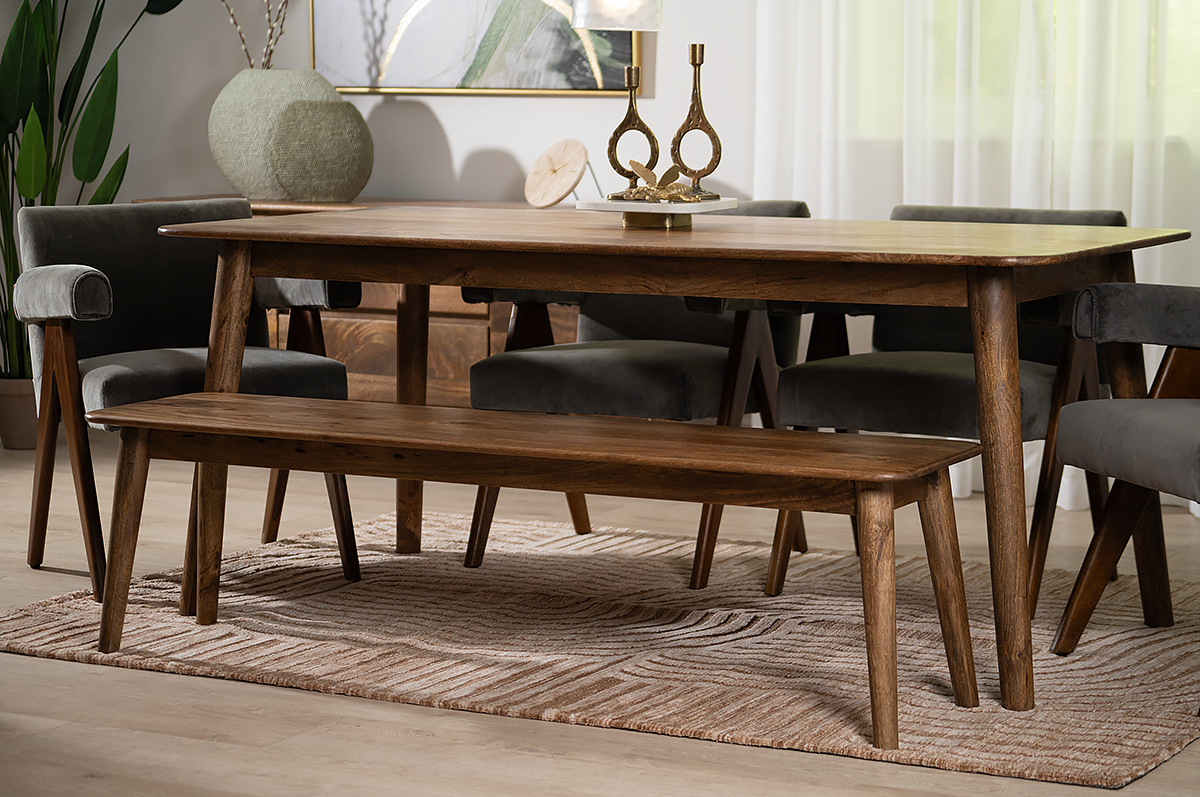
Dining tables are at the heart of the family life, and they are used in many ways in the home; as a place to eat, to study or to play games during a family gathering. The versatility of the dining table is one of the things that make it so attractive to home – even if it is not your initial thought.
In this blog we will be taking you through different types of dining tables available here at Michael Murphy Home Furnishing based on the selection of wood we have on offer. And then we will tell you how to take care of your wood (not limited to dining tables, can be used for dining chairs, coffee tables, and so on!).
The different types of wood we have are:
- Acacia
- Oak
- Mango wood
- Ash
Acacia:
While many wood furniture needs to be protected from liquids and may warp, acacia can handle regular moisture contact! Aside from looking beautiful, acacia is naturally antimicrobial and water-resistant. Acacia is dense and is over 20% more dense than oak! A lot of furniture being produced uses acacia for this reason. It reduces wear-and-tear. It also has many uses like chopping board and decorative plates due to its durability – people also use acacia for boats! Which is why we use acacia a lot for tables, such as dining and coffee tables.
Dining tables in acacia:
- Havana
- Lex
- Ellis
- Catania
- And so much more!
Oak: We all know and love oak – it is probably one of the most common, tried-and-true types of wood. Oak is commonly used for flooring, panelling and of course, furniture. Oak is super durable and often cut in a way that will prevent warping! It has a distinctive look due to the way it is cut, so every oak-made product will be unique – which is a bonus! Dining tables made with oak:
- Wave
- Slate
- Caravel
- Haystack
- Berlin
- And many, many, many more!
Mango Wood:
You may be thinking… “Mango? Like the fruit?” Yup! Mangoes grow on mango trees. And we use mango trees to create mango wood. But why? Well, mango trees produce mangoes which we eat and drink. And when the tree is finished producing mango, it is cut down and used for timber due to its strong and durable qualities. Mango wood is naturally highly resistant to water due to its dense grains. The benefit of mango wood is that every cut is unique – similarly with oak, every piece is different. But the difference between oak and mango wood is that mango wood comes in a variety of colours depending on how old it is, how long it grew mangoes for and what the weather was like where it was grown!
Dining tables created with mango wood:
- Holland
- Karma
- Vintage
- And so much more!
Ash: Ash is deemed a great wood to work with. A lot of ash is produced in Ireland as it is our tallest native tree. Though ash is the most common type of timber in our country, it also gets diseases quite easily which is why we use so much of it in our furniture, tool handles and sporting goods, like hurls, due to its tensile strength. This means it can take impact which is why we use it the way we do! Ash dining tables usually contain no glue, screws or nails, and instead uses traditional carpentry techniques using wooden dowels in their place! Dining tables in ash:
- Audrey
- Tuva
- And more customisable Bespoke options too!
Taking care of your wooden furniture:
There are many ways you can take care of your wooden furniture, most important being oiling. To ensure the enduring beauty and protection of your table, it’s highly recommended to start oiling as soon as it arrives. Oiling is straight-forward but significant to enhance and safeguard the wood – it is important to note that oiling your table won’t completely seal the table, as wood needs to breathe and release its own oils!
You’ll need to get the appropriate oil for your wood type and 2 cloths. Begin by applying oil onto one cloth and gently rub it along the wood grain on the table’s surface. For larger tables, divide the process into manageable sections, while smaller tables can be oiled in a single go.
After approximately 10 minutes, switch to the second cloth and wipe away any excess oil from the top before it becomes tacky. For the initial treatment, it’s recommended to oil your table 2-3 times, allowing around 4-5 hours between coats. Don’t overlook treating the underside as well. Subsequently, you may find that oiling the table’s top every 4-6 months suffices, depending on factors like exposure to sunlight and heat. By following these straightforward steps, you’ll ensure that your furniture maintains its splendid appearance and longevity for years to come.
This dedicated care will reward you with a table that stands the test of time while retaining its allure and charm!
We’ve also got a Revive & Care Wood Kit if you would like the extra security for your wood. It contains a wood cleaner, wood polish and fabric and leather cleaning solutions (for your dining chairs). This handy is designed to help you maintain and care for furniture at home – thus helping you to keep the appearance of your wooden furniture how you like it and ensure maximum longevity!