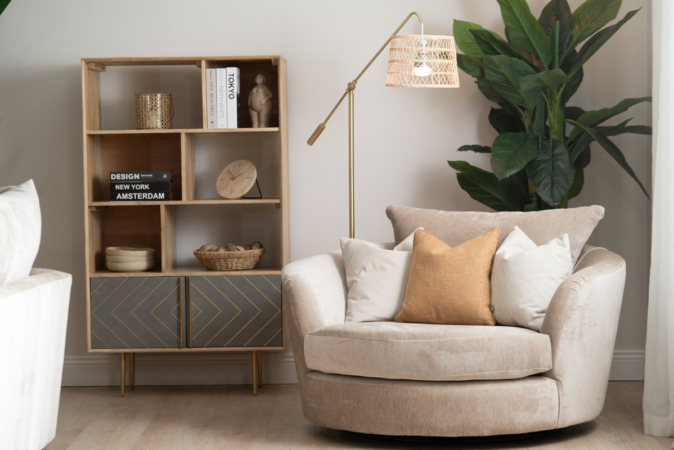
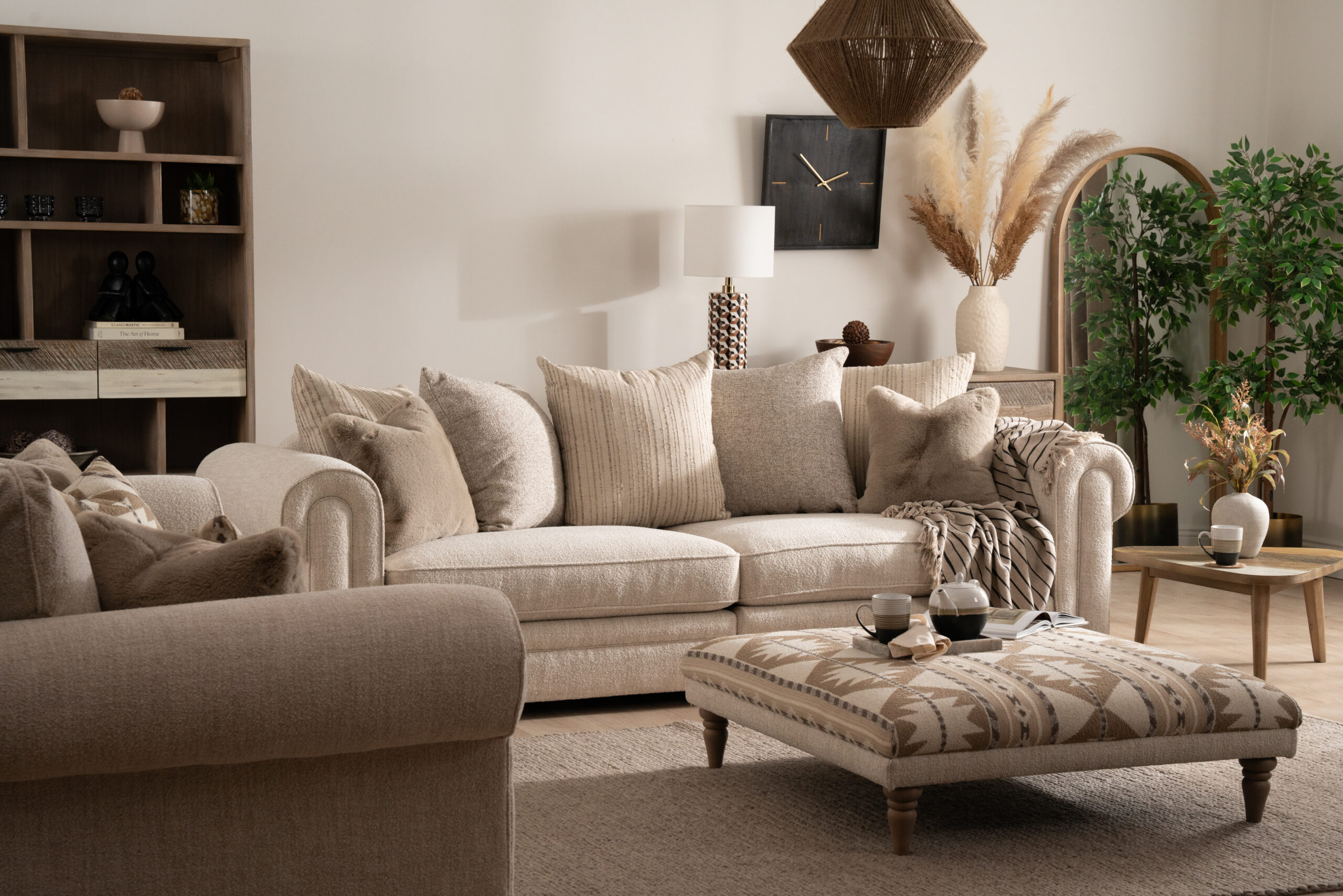
We all know there’s more to choosing a sofa than just finding one that looks good and feels comfortable. The size you end up deciding on can affect how comfortably people can sit, how easily you can move around the room, and whether your living space feels balanced or not. It seems simple at first, and then you’re inundated with terms like ‘two-seater’, ‘modular’, ‘chaise’, ‘four-seater’, ‘corner sofa’, and it just keeps on going. How many people can each size accommodate? How much space will they take up? It’s a lot to consider.
When it comes down to it, how big your sofa needs to be depends on how you use your living room, who’ll be using the sofa, and ultimately how much space you have to work with.
How many people fit on a two-seater sofa?
Ah, the humble two-seater. Generally designed for two people, this is often a practical choice for smaller living rooms, apartments, or in rooms where the sofa isn’t the only seating option. But here’s the kicker. ‘Two-seater’ doesn’t necessarily mean that two adults will have lots of room. Seat width and depth can vary a lot from one sofa to another, so two people may be able to sit comfortably on one model, while another might feel a bit cramped. If your sofa is mainly for one or two people, a two-seater can be a great choice that doesn’t take over the room.
How many people fit on a three-seater sofa?

When it comes to an average living room, a three-seater is usually the most versatile option. As suggested by the name, it’s generally intended for three people. However, it’s important to keep in mind that the actual usable seating space depends on the design. If you value a bit more space to stretch out, a three-seater can provide plenty of room (without crossing over and taking up too much space on someone else’s ‘side’). It’s also a good choice for families, and can work as the main sofa alongside additional seating like an armchair or footstool. If you regularly host guests though, you might have to consider whether three seats are enough for your usual crowd.
What about a four-seater?
These are particularly useful for larger families or households that spend a lot of time relaxing together, and they provide more room to spread out. Keep in mind that a larger sofa doesn’t automatically make better use of a room. With a bigger sofa, you’ll need to be a bit more mindful of the dimensions you have to play with. You still need to make sure there’s enough surrounding space for people to move comfortably and it’s overall proportions need to suit the size of the room, too. If you’re working with a smaller space, a large sofa can make everything feel a bit too cramped.

Are corner sofas good for families?
Corner units are popular for a few reasons, one being that they make use of two sides of a room and plenty of seating, all in one piece of furniture. Depending on the configuration and dimensions, they can accommodate 6 people comfortably, so they’re a good choice if you often have guests, or have a busy household. They’re also great for stretching out on rather than sitting upright, which makes getting comfy and cosy a whole lot easier. These sofas can take up a lot of space in a room, so make sure to measure the dimensions before committing!
How many people can sit on a chaise sofa?
A chaise sofa combines a standard sofa with an extended section designed for putting your feet up, so they’re particularly appealing if lounging is a priority. The chaise itself isn’t necessarily an additional seat (there’s no back to it!), but it can come in handy for extra spots. When making your decision, consider how much time you spend horizontal on the sofa versus how much time is spent upright to help you make your choice!
Don’t forget about the room itself!
Remember that the room is just as important when considering a new sofa! The number of people you want to seat is really only half of the equation. Before making your final decision, measure the room carefully and think about how people will move around the space. Make sure you leave yourself enough clearance for walkways, doorways, and any other furniture you’ll want to add, like coffee tables, side tables, storage, and rugs. Most importantly, check that the sofa can actually make its way through your front door, hallway, and any tight turns along the way. A good tip is to mark out the sofa’s dimensions on the floor using masking tape. This will give you a much better idea of the space it’ll occupy before you commit to a particular size.