
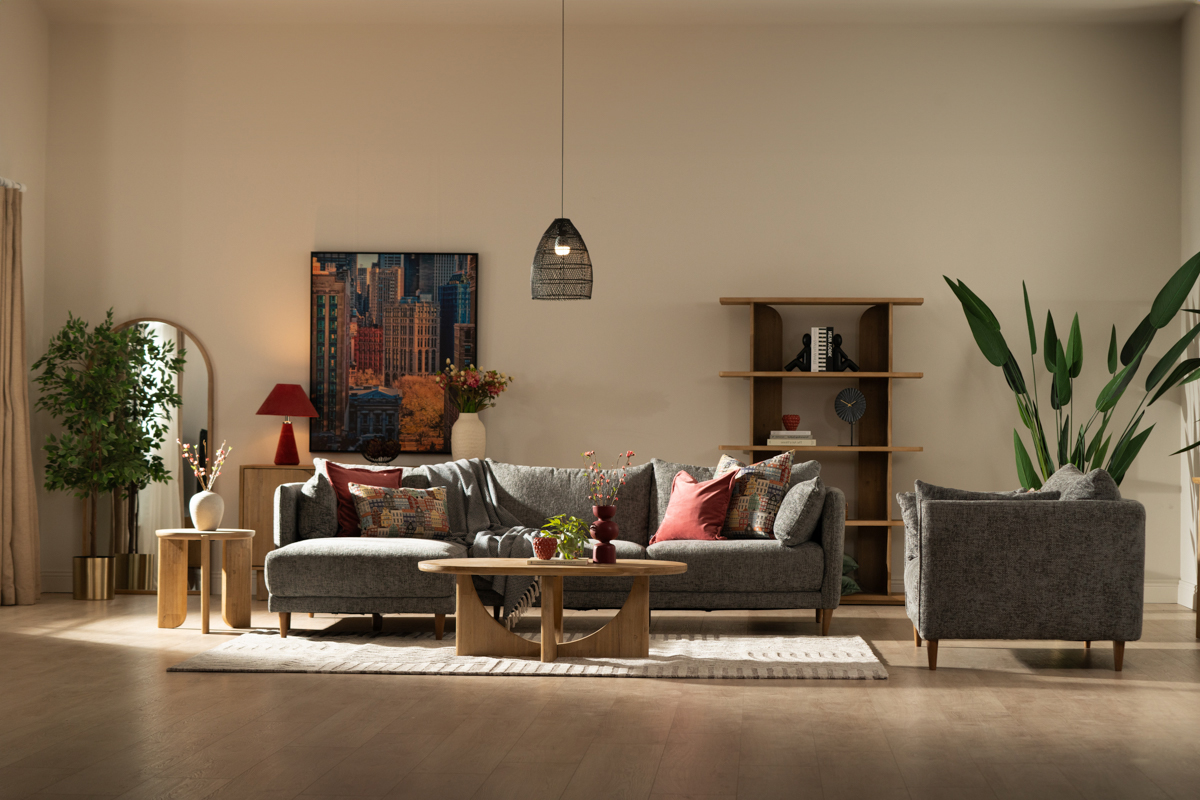
When it comes to decorating your home, there’s no shortage of so-called ‘rules’; you know, those pieces of advice that sound helpful, but actually can tend to hold you back. In all honesty, great interiors aren’t just about following a strict set of dos amd don’ts. In the end, it really comes down to creating a space that feels personal, balanced, and most of all – fits your lifestyle.
So in this edition, we’re going back to mythbusting, and putting some of the most common interior misconceptions, and sharing what you really need to know to design a home you love.
Myth 1: Dark Colours Make A Room Feel Smaller
This one has been repeated for decades, but it’s not always true! Dark tones can absolutely work in smaller spaces; it’s all about how you use them! Pair a deep navy wall with a light oak sideboard like the Radcliff, or a dark charcoal sofa like the Isabella with warm-toned cushions and throws – the perfect recipe to create a space that feels warm, cosy, and intimate, not cramped.
The key here is contrast. Lighter flooring, soft lighting, and a few reflective accents (think mirrors, glass ornaments, even metal pieces) will keep things balanced. Dark walls are great for making your furniture finishes pop too!
Interior Myth 2: You Should Never Mix Wood Tones
Wrong! You absolutely can! While matching every wood finish in your home might seem like the safer choice, it can sometimes make a room feel a little bit flat, especially without any contrasting décor to balance the space. Mixing tones is a great way to add depth and character.
The trick here is to keep undertones consistent. Warm woods, like mango or walnut, work really well together, while cooler tones, like ash or grey wood complement each other nicely. That’s not to say you can’t mix and match tones if you want – by all means, don’t let us stop you! Layering these finishes gives your home that effortlessly curated look you see in designer interiors, without everything feeling too ‘same-y’.
Interior Myth 3: Small Rooms Need Small Furniture
It’s tempting to think that choosing smaller furniture will make a space look, or even feel bigger, but the opposite is often true. Lots of little pieces can make a room feel cluttered, while one or two larger items will help to provide structure and flow to the space.
For example, a spacious two seater sofa with slim arms, like the Charm, can actually make a compact living room feel larger, especially when paired with streamlined pieces like our Ellis Lift Top Coffee Table, or a narrow console table like the Budapest. The same goes for bedrooms; a well-proportioned bed with a high-headboard creates a sense of height and balance, even in smaller spaces.
Interior Myth 4: Everything Has To Match
Matching furniture sets do have their place, there’s certainly no denying that. One thing that people may not realise, though, is that you can achieve a stylish, cohesive look by mixing materials and textures. A fabric sofa beside a marble topped table, or a sleek metal lamp paired with a timber coffee table adds personality and interest.
If this sounds a little bit overwhelming, or you’re not entirely sure where to start, never fear. It’s all about finding a common thread that ties everything together. Look for a consistent colour palette, tone, or shape. You don’t have to stick to perfect uniformity, but look for complementary pieces. When everything matches too perfectly, you tend to overlook the smaller details. When things complement each other, the space feels more layered and inviting.
Interior Myth 5: You Can’t Mix Old and New Styles
One of the easiest ways to make your home feel personal is to blend eras. No, not Taylor Swift albums, though you can do that too! A mid-century armchair can look incredible beside a contemporary sideboard, and a modern dining table can be softened with traditional upholstered chairs.
This is a great way to incorporate old and new pieces, especially if you’ve inherited furniture from a previous tenant or family member. To avoid a scattered, chaotic look, use accents that complement each other to tie the room together.
Good Design Has No Rules
Ultimately, every home is different, and that’s what makes decorating so exciting. The best interiors come from mixing practicality with personality. Maybe for you that’s a rich, moody wall colour behind your neutral sofa, or maybe it’s a bold blend of timber tones in your dining space.
If a so-called ‘rule’ doesn’t work for you, then it’s perfectly fine to do away with it; some rules are meant to be broken, after all. Choose pieces that work for your lifestyle and that you know you’ll love and use every day. That’s the real secret to a well-designed home!